
As more and more families face the loss of a loved one to suicide and deaths of this nature permeate the news, it’s easy to question why more isn’t being done to prevent future losses. The American Foundation for Suicide Prevention works tirelessly to share their resources and messaging in communities and the National Suicide Prevention Lifeline also helps.
Recently, I was surprised and “thrilled” when I received a local event notification from Marquette University’s College of Health Sciences (my alma mater) about a panel discussion they were hosting called “Depression – The Intersection of Hope, Medicine and Research.” (You can watch the video here.) Six individuals – including university professors specializing in mental health disorder res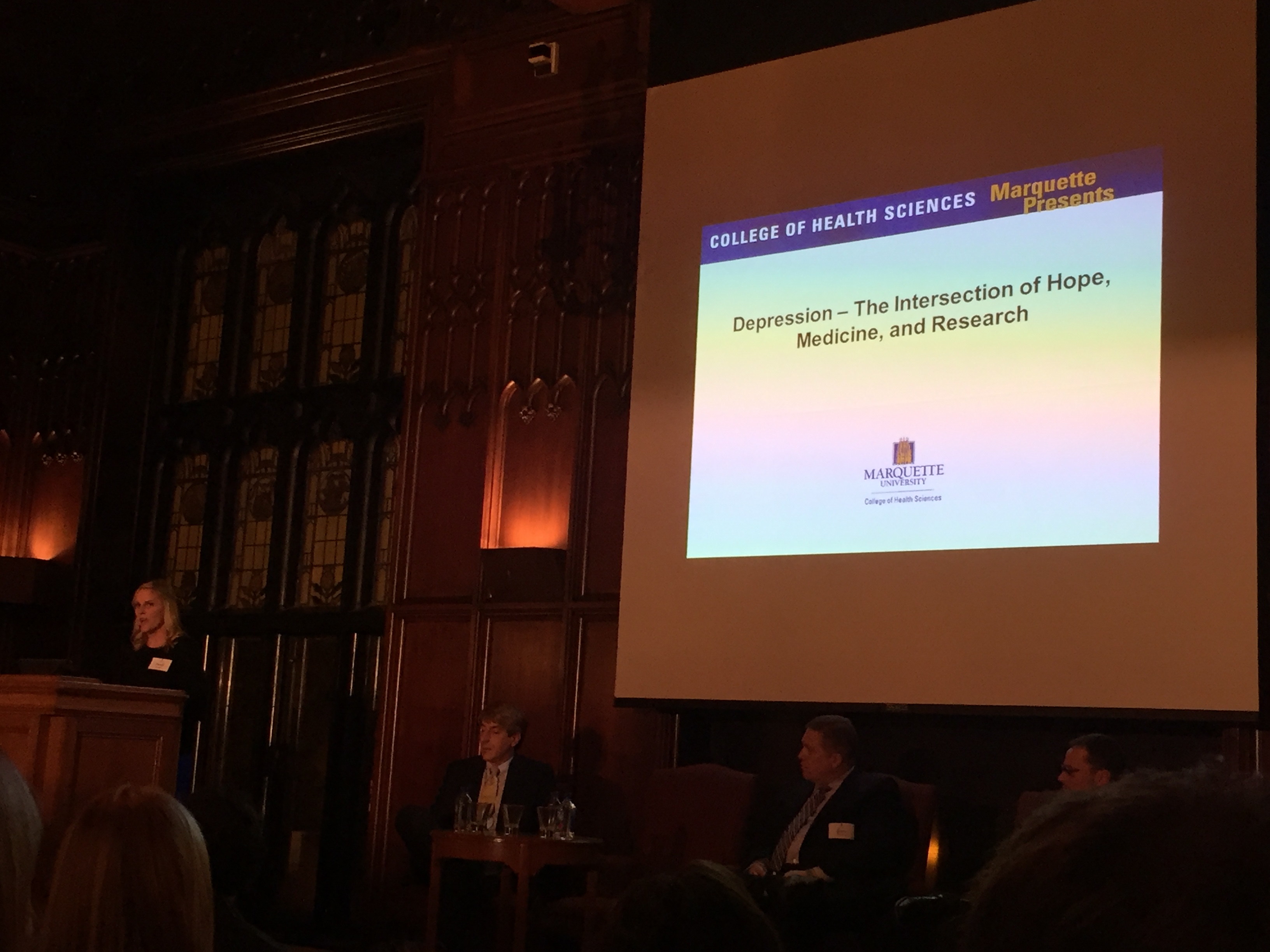 earch and the director of a Milwaukee-area psychiatric hospital, shared about their backgrounds and what we’re learning today about the causes and potential treatments of mental illness. While there is no overnight solution, I felt comforted to know that so much is being done behind the scenes to understand and address depression – especially by my university.
I learned some startling statistics at the event:
- These experts view depression as a potentially “terminal illness.” There are more suicides annually than all cancers combined, except breast cancer
- 40% of people with PTSD will develop depression
- 50% of people with depression also have an anxiety disorder
- Many people facing these disorders are experiencing a “thought error” – if I’m feeling this way now, I will feel this way forever
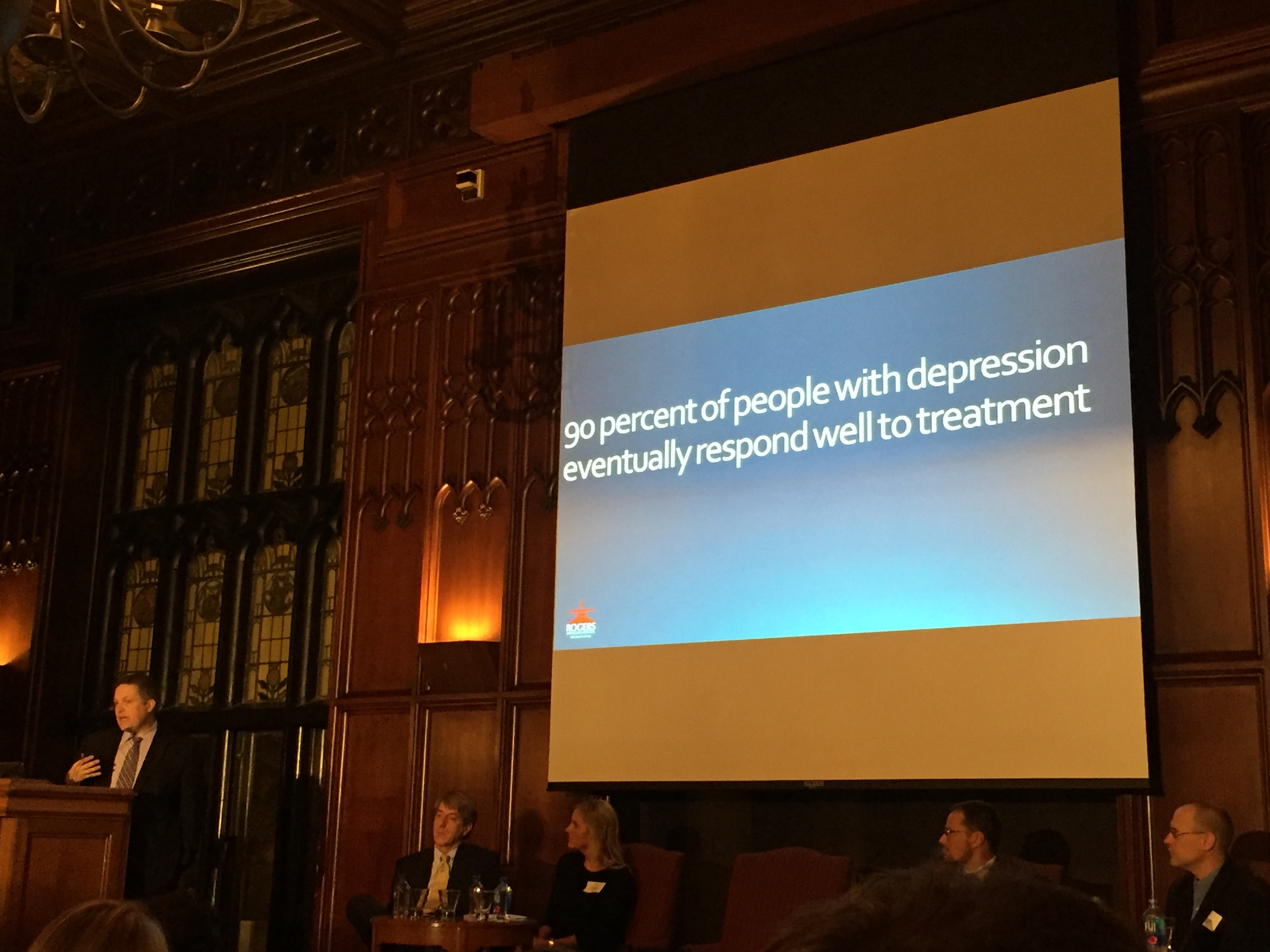
- However, 90% of people with depression even
 tually respond to treatment
 - Anti-depressants can take time to work – at least 1-2 weeks to observe minor improvement and 2-3 months for them to fully take effect. (This isn’t great when someone is in deep depths of despair and may assume nothing is working to help them and give up on their medications.) The reasons for this delay and ways around it are being researched.
- Keep in mind; normal changes in mood are good. Occasional low mood shows us that things aren’t right and encourages us to course-correct. Depression that is disruptive and persistent without the ability to see a positive change signals a need for help.
For reference, the topics the professors are researching include:
- Understanding the brain pathways responsible for regulating hormonal responses to stress and their relationship to disorders such as depression (William E. Cullinan, Ph.D.)
- Cognitive function and brain motivational states and their relationship to mental illness, including depression and PTSD (Paul Gasser, Ph.D.)
- The link between emotional learning and disorders such depression, PTSD, anxiety and schizophrenia (Marieke Gilmartin, Ph.D.)
- The neural systems that regulate emotional processing and motivation, as these systems will determine how behavioral disorders can be more effectively treated (Robert Wheeler, Ph.D.)
Also speaking at the event was Boston-based sports reporter Trenni Kusnierek (originally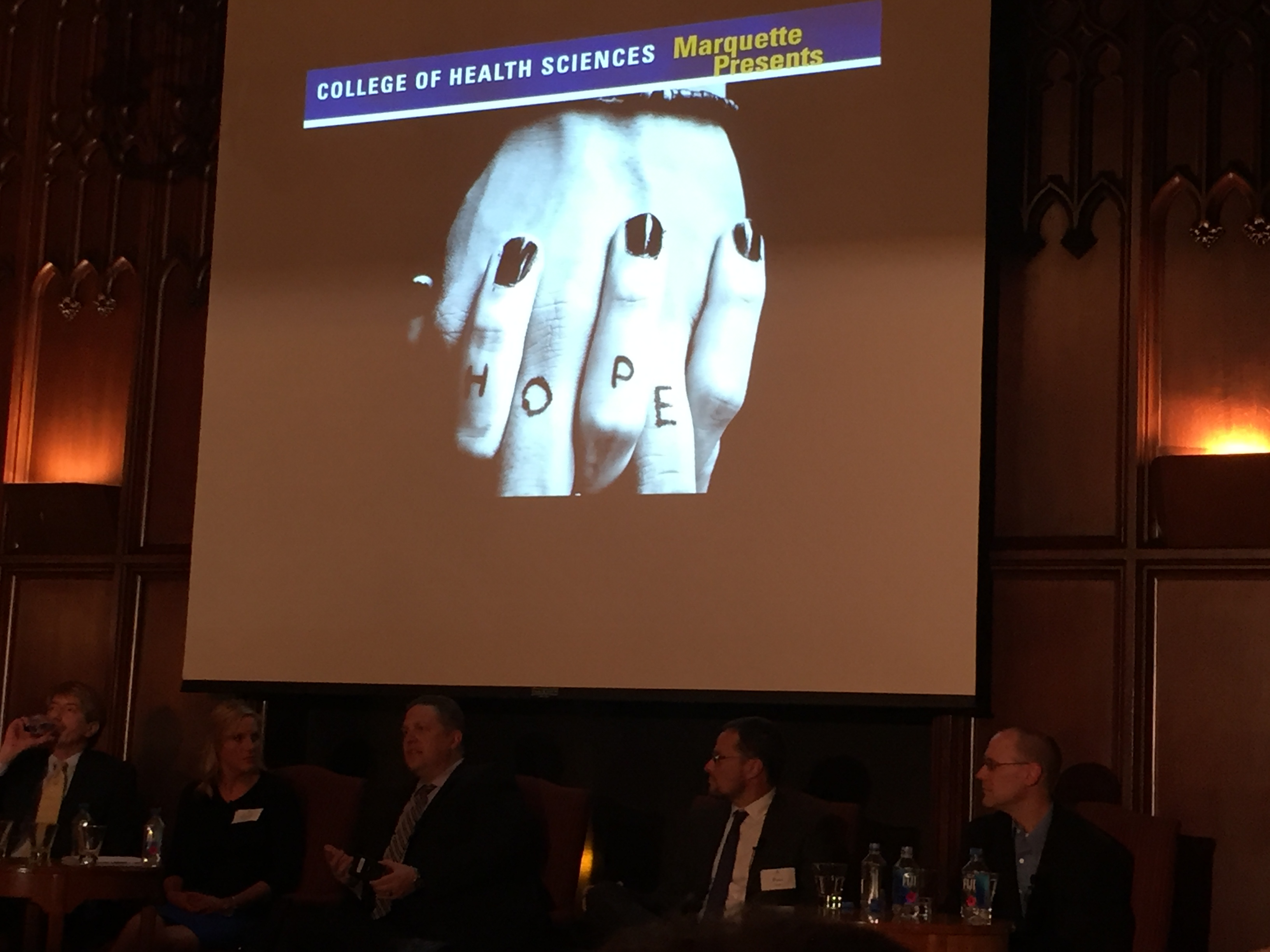 from Wisconsin), who shared candidly about her ongoing struggle with depression. Viewers see her on TV as a bubbly blonde personality who has everything going for her. Yet, inside, she battles something dark and sometimes debilitating. She wants the community to know that depression doesn’t have a “look,” or prototype. Many victims suffer in silence. Early on, she had no idea what she was feeling and eventually found relief in a diagnosis: depression. Finally learning and understanding what’s wrong can bring relief to someone who doesn’t understand why they feel so bad inside. Three years ago, Trenni decided to open up about her experience in a Milwaukee Magazine article. She worried she would be judged or even lose her job because she admitted she faces depression. On the flip side, she received an outpouring of support from viewers, friends and peers who shared their similar experience. She shared something we commonly say here on the blog: you would never blame someone for losing a loved one to any other disease, or the patient for the disease – so why with mental illness?
I’m so proud of Marquette University, the event speakers and all those who continue to better understand the causes, treatments and prevention of depression and suicide.
If so much is being done to prevent suicide then why are the statistics still the same as they were or maybe higher?
I wish I had the answer. What I took away from this lecture is that these particular individuals are researching the cause of depression and how it can be effectively treated. Unfortunately, research takes a significant amount of time and then has to be tested and re-tested, etc. At the least, I was glad to learn that effort is being put into this, but I equate it to turning a large ship versus a tugboat.